
First domain
Colorado potato beetle: life stages, detection, and validation scope
Definition
Colorado potato beetle (Leptinotarsa decemlineata) is a defoliating beetle of potato and other solanaceous crops. Its egg masses, larval instars, and adults are visually distinct, and its widely documented resistance to multiple insecticide classes is why management programs emphasize scouting and thresholds rather than calendar treatment. That combination makes it a demanding first domain for life-stage detection.
This page covers the biology relevant to detection, why Swathmark chose this domain first, and exactly what has and has not been validated.
- Published
- Last updated
What is the Colorado potato beetle?
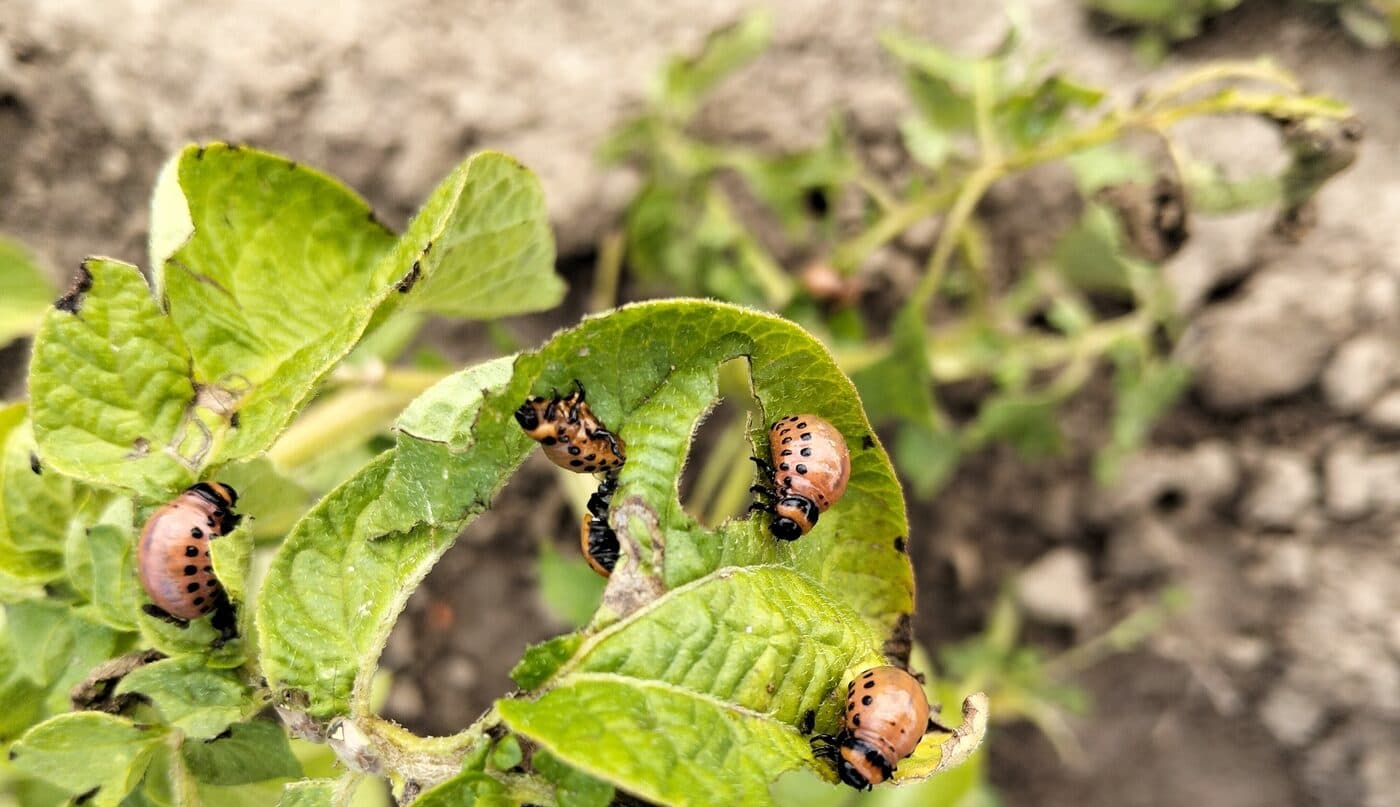
A leaf-feeding beetle whose larvae and adults consume potato foliage, and which also feeds on other solanaceous crops including tomato and eggplant. Heavy feeding removes leaf area, and severe defoliation reduces the plant's capacity to produce yield.
Adults overwinter in soil and emerge to feed and lay eggs as host plants become available, with the number of generations in a season varying by region and season length. It is among the most studied insect pests in temperate agriculture, which is one reason it is a reasonable domain to be measured against: the biology is not in dispute.
This is general background. Local pest development, thresholds, and management guidance come from the grower's extension service and advisers, not from this page.
Which life stages matter for detection?
Egg masses, the larval instars, and adults are all visually distinguishable to a trained observer, but not equally easy to image. Difficulty rises as the target gets smaller and as it sits further under the canopy.
| Stage | Appearance | Detection difficulty |
|---|---|---|
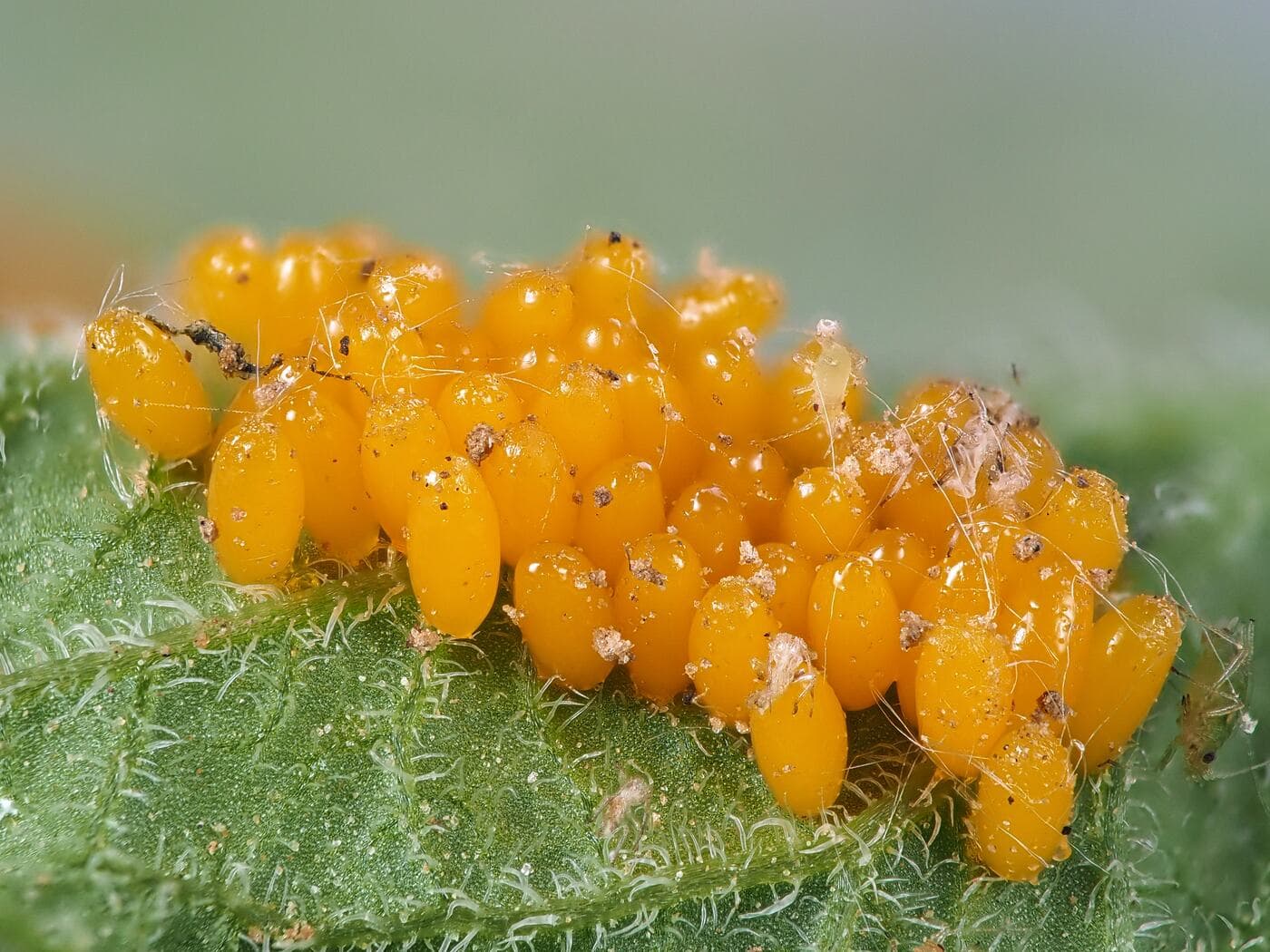
| Egg mass | Clusters of yellow to orange eggs, usually on leaf undersides. | High: undersides are occluded from above-canopy capture. |
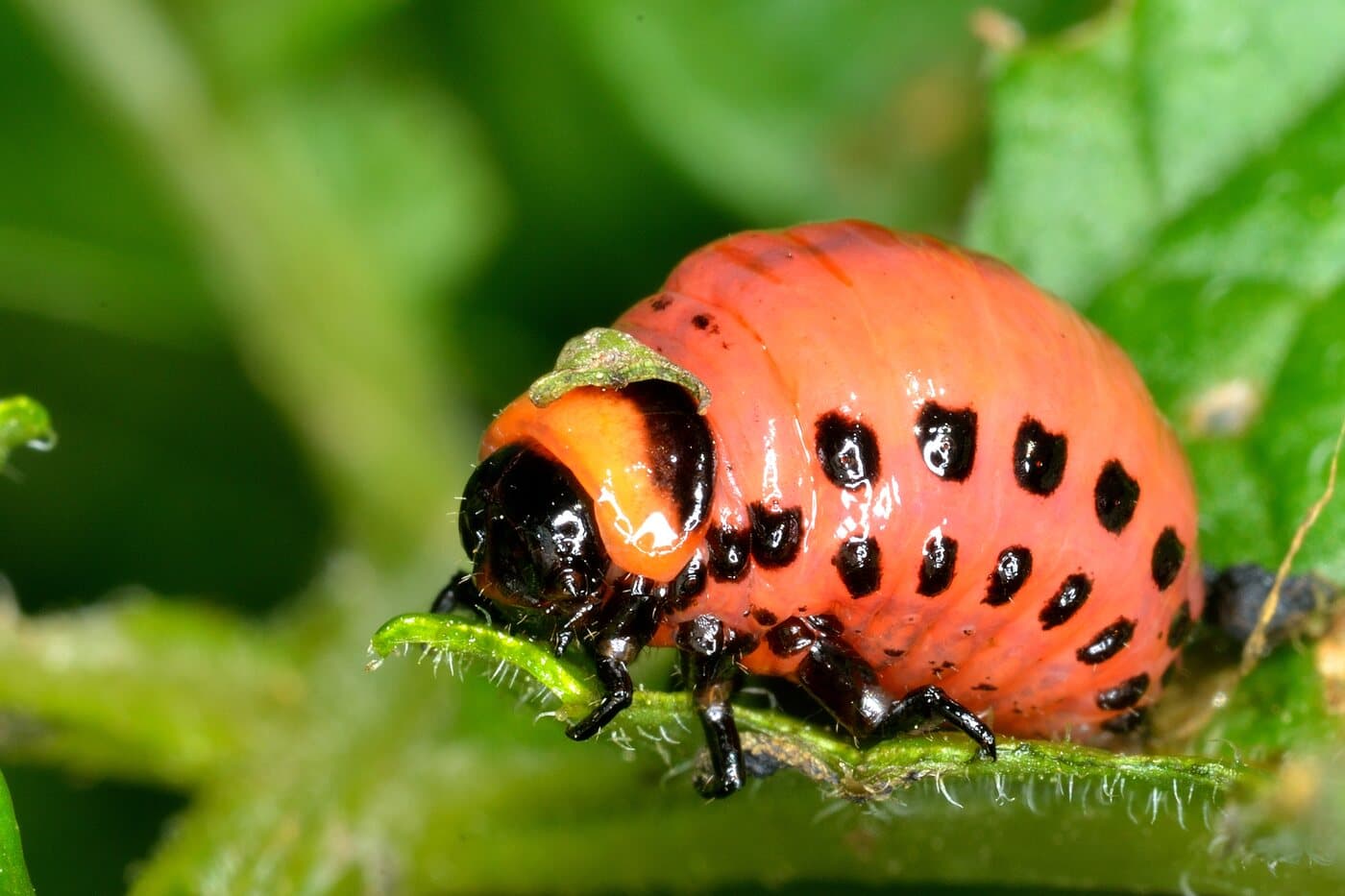
| Early larval instars | Small, reddish, soft-bodied, with a dark head and the spot rows not yet obvious. | High: small targets demand fine ground resolution at the leaf. |
| Late larval instars | Larger, more orange, with two rows of black spots along each side. | Moderate: larger and more conspicuous, often in groups. |
| Pupa | In the soil rather than on the plant. | Not imageable from foliage capture. |
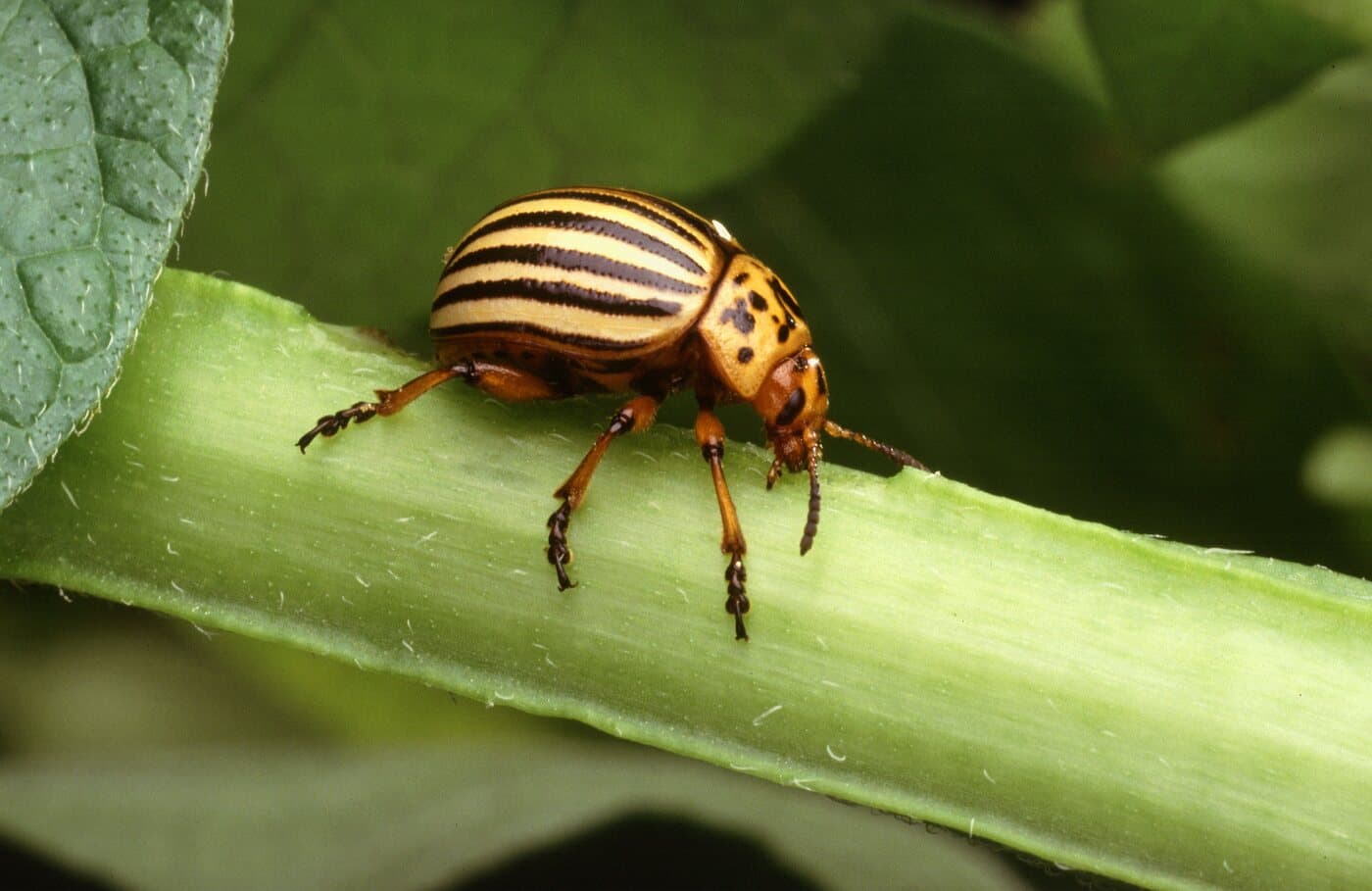
| Adult | Rounded beetle with ten black stripes — five per elytron — and a spotted orange-brown pronotum. | Moderate: distinctive, but mobile and often on lower foliage. |
| Feeding damage | Ragged loss of leaf area, progressing to skeletonized foliage. | Lower: damage is visible, but its cause is not established by sight alone. |
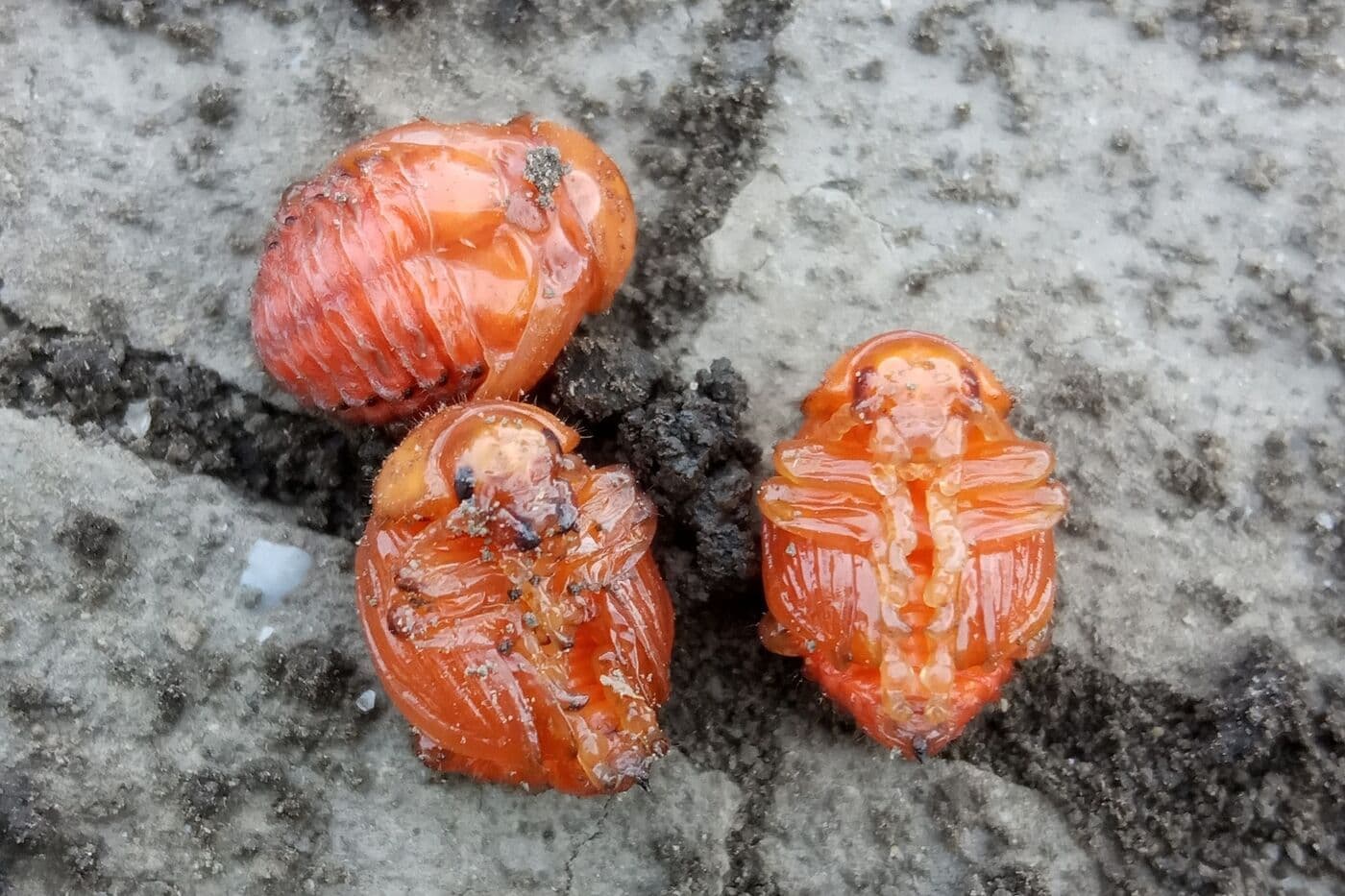
.jpg)

.jpg)
Why does life stage matter for a treatment decision?
Because stage changes both what a threshold policy counts and how a population will develop. A count that does not distinguish stages is a weaker input than the same count that does.
Stage composition carries timing information that a total count discards: a population dominated by egg masses and early instars is at a different point in its development than one dominated by late instars and adults. Which stages a policy counts, and how, is stated by the policy — not inferred by the detector.
How is Colorado potato beetle monitored in practice?
By scouting: inspecting sampled plants along a route, recording stages and counts or estimating defoliation, and comparing the result to a threshold set by an extension program or adviser.
The reason thresholds dominate this pest's management is resistance. Colorado potato beetle populations have developed documented resistance to multiple insecticide classes, so extension guidance emphasises resistance management — intervening on observed pressure rather than on the calendar, and rotating insecticide modes of action so a population is not repeatedly exposed to the same selection pressure. Programmes also anticipate timing with degree-day accumulation from a spring biofix, rather than waiting to find a generation already established.
Swathmark does not provide agronomic, pesticide-label, or treatment advice, and states no threshold values. Monitoring method, threshold selection, product choice, and label compliance remain with the grower and their advisers.
Why did Swathmark start with Colorado potato beetle?
Because it is a hard, honest test of a full capture-to-decision loop rather than an easy demonstration. The pest is visible, biologically staged, and threshold-managed, so every part of the chain is exercised and can be checked against known biology.
- Visible on foliage, so the detection question is genuinely a vision question.
- Biologically staged, so life-stage detection matters rather than being decorative.
- Threshold-managed already, so a decision layer is answering a question growers actually ask.
- Well studied, so a claim about it can be checked against an established literature.
- Occlusion, small early stages, and look-alike ambiguity are all present — the failure modes are real, not contrived.
The data, policy, evaluation, and equipment interfaces are designed to extend to further visible, threshold-managed pests and specialty crops. That extension is a design direction, not a claim of current performance beyond this domain.
What is the validation scope?
Colorado potato beetle in potatoes. Any statement about another crop, pest, region, or capture system is outside the scope Swathmark is working within, and the platform is designed to abstain rather than extrapolate across that boundary.
Scope is stated at this level of detail because it is the part most often left vague. A model evaluated on one crop, in one region, with one capture geometry has been evaluated on exactly that, and the honest description of anything beyond it is that it has not been tested.
What evidence exists today?
No detection performance figures are published for this or any pest. Accuracy, recall, precision, calibration, and false-treatment rate are conditional claims requiring an approved evidence record, and none has been approved for publication.
When figures are published they will state the dataset, the field and region scope, the crop and pest, the model and policy versions, the operating conditions, and the known limitations. A number without those is not evidence — it is a number, and a grower cannot use it to decide anything.
Inputs, outputs, limitations, and evidence status
Inputs
- Potato-crop field imagery from registered capture sessions.
- Crop growth stage and capture geometry at the time of capture.
- Adjudicated life-stage labels from qualified reviewers.
- A threshold policy version whose scope covers this crop, pest, and stage.
Outputs
- Life-stage estimates where the stage is visually separable at capture resolution.
- Counts and visible defoliation within the imaged area only.
- Abstention where a stage is ambiguous or a target is occluded.
- A decision record carrying the model and policy versions that produced it.
Limitations
- Egg masses on leaf undersides and early instars deep in the canopy may be absent from imagery.
- Pupation occurs in soil and is not observable from foliage capture.
- Visible defoliation does not by itself establish its cause.
- Validation is confined to Colorado potato beetle in potatoes.
- No threshold values, monitoring protocol, or treatment guidance is provided.
Evidence status
- No detection accuracy, recall, precision, calibration, or false-treatment figures are published.
- No dataset, image count, field count, or acreage figures are published.
- No university, extension service, or agency endorsement is claimed or implied.
- Biology stated here is general published background, not a Swathmark research result.
Terms used on this page
Definitions are shared site-wide. The full list is in the glossary.
- Colorado potato beetle
- A defoliating beetle of potato and other solanaceous crops whose egg masses, larval instars, and adults are visually distinct. Widely documented insecticide resistance is why its management emphasizes scouting and thresholds.
- Life stage
- The developmental phase of an insect — for example egg mass, larval instar, pupa, or adult. Life stage changes both how a pest appears in imagery and how a management program treats it, so detecting the stage matters as much as detecting the species.
- Defoliation
- Loss of leaf area caused by feeding damage, commonly assessed as a percentage of the canopy. Several pest programs express thresholds in defoliation rather than pest counts.
- Crop scouting
- Structured in-field inspection of a crop to estimate pest presence, life stage, and pressure, typically by sampling plants along a route. Scouting is skilled, sampled, and time-limited — which is why its coverage and repeatability vary.
- Resistance management
- Deliberately varying control tactics, including rotating insecticide modes of action, so a pest population is not repeatedly exposed to the same selection pressure. It is central to Colorado potato beetle management because of the pest's widely documented resistance to multiple insecticide classes.
- Degree-day accumulation
- Tracking insect development by accumulating heat units above a species-specific lower developmental threshold, counted from a biofix — an observed biological starting event such as the first adult seen in spring. Programmes use it to anticipate when a life stage will appear rather than waiting to find it.
- Validation scope
- The precise boundary of what has been tested: the crop, the pest, the life stages, the regions, the capture systems, and the model and policy versions involved. A claim without a stated validation scope is not a usable claim.
Related topics
- Biological threshold policiesWhat a biological threshold policy contains, how it differs from a detection, who sets thresholds, and why policy is versioned separately from model code.
- Agricultural computer visionWhat agricultural computer vision estimates from field imagery, what it cannot establish on its own, and why a detection is not yet a treatment decision.
- Pest decision platformHow a pest decision platform differs from pest detection: the verified inputs it requires, the treat, no-treat, or abstain outputs it produces, and who uses it.
Swathmark does not provide agronomic, pesticide-label, or treatment advice. Thresholds, product selection, and label compliance remain the responsibility of the grower and their advisers. Scope of use.